Practice Area
Hurt in a fall on someone else's property?
Property owners have a legal duty to keep their premises reasonably safe. When they don't — and someone gets hurt — the law calls that negligence, and you may be entitled to compensation.
Free consultation · Personal, direct attention · English & Español
Overview
What you need to know
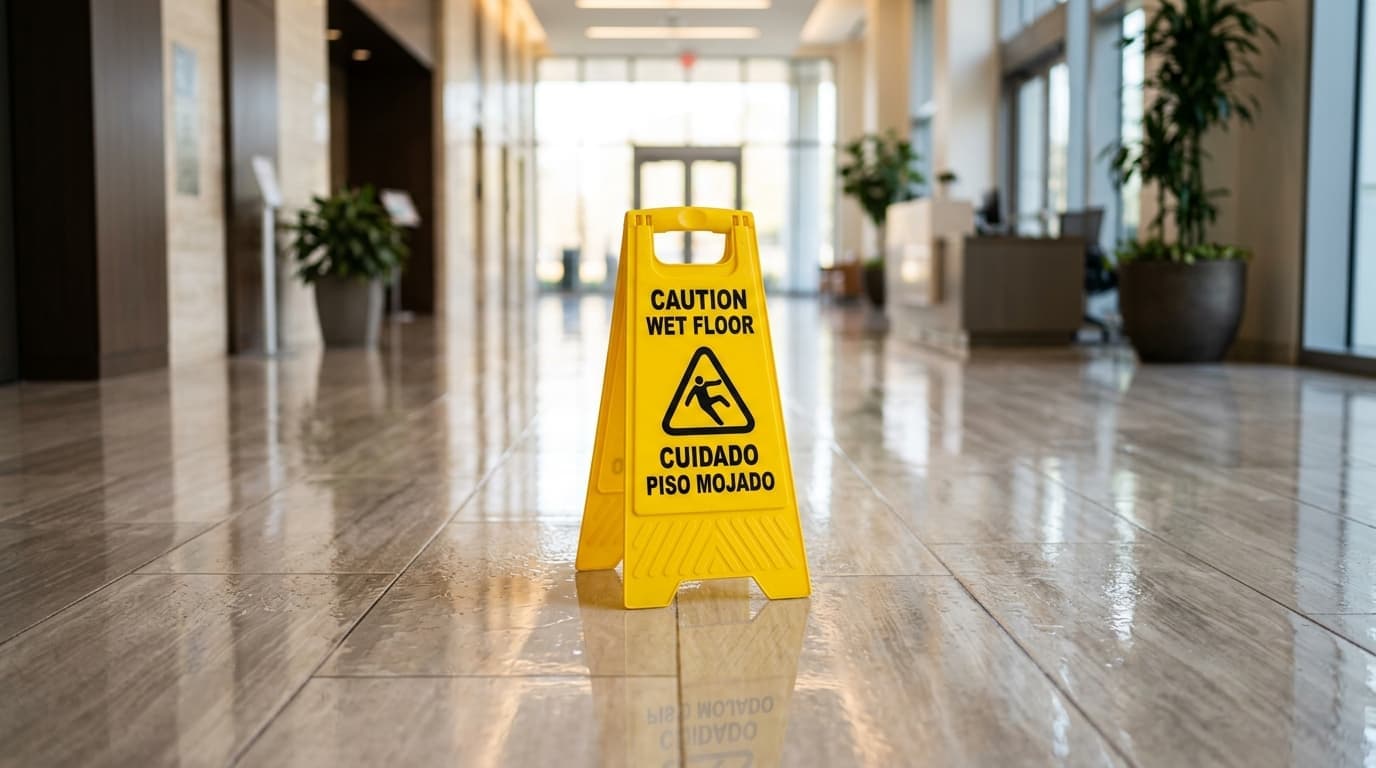
Slip-and-fall injuries are often dismissed as clumsiness, but the reality is different: wet floors without warning signs, broken staircases, poor lighting, and neglected walkways injure people every day. Businesses and property owners are responsible for finding and fixing hazards — or warning visitors about them.
These cases move fast in one crucial way: the evidence disappears. The spill gets mopped, the camera footage gets overwritten, and the broken step gets repaired. Documenting the hazard immediately, and putting the property owner on notice to preserve evidence, can make or break the claim.
We move quickly to secure the evidence, establish what the owner knew or should have known, and pursue the compensation your injuries deserve.
Protect Your Claim
What to do next
The steps you take early on can make a real difference in how your case turns out.
- 1
Report the fall immediately
Tell the manager or owner before you leave and ask for a written incident report. An unreported fall is easy for an insurer to deny.
- 2
Photograph the hazard
The spill, the broken step, the lighting — capture it before it's cleaned or repaired. Include something for scale if you can.
- 3
Get witness information
Names and phone numbers of anyone who saw the fall or the hazard — including employees.
- 4
Seek medical care
Falls cause injuries that worsen over days, especially to the back, hips, and head. Get examined promptly.
- 5
Call us before the evidence disappears
We can demand preservation of camera footage and maintenance records — but only if we're involved before they're gone.
Our Approach
How we help
Rapid evidence preservation
Preservation letters for surveillance footage, inspection logs, and maintenance records — sent before they can vanish.
Proving notice
The heart of a premises case is showing the owner knew or should have known about the hazard. We build that proof methodically.
No fee unless we win
We work on contingency — you pay nothing up front, and we only get paid if we recover compensation for you.
We keep you informed
Direct access to your attorney, plain-language updates, and answers in English or Spanish — whichever you prefer.
Compensation
What you may recover
Depending on the facts of your case, compensation may cover:
- Medical bills and future treatment
- Lost wages and earning capacity
- Pain and suffering
- Physical therapy and rehabilitation
- Assistive devices and home modifications
- Out-of-pocket expenses
Every case is different. Past results do not guarantee future outcomes, and no attorney can promise a specific result.
FAQ
Questions we hear often
Answers to common questions about slip & fall cases. Don't see yours? Give us a call — we're happy to help.
Generally, that a dangerous condition existed, that the property owner knew or should have known about it, and that their failure to fix it or warn you caused your injury. Evidence like camera footage, inspection logs, and witness accounts is central — which is why acting quickly matters.
No. Arguing the victim was careless is the most common insurer defense, and partial fault does not automatically bar recovery. The facts — visibility of the hazard, warning signs, lighting — determine how fault is shared, and that's a dispute we know well.
The duty a property owner owes you varies with the circumstances, and claims against a business typically proceed against its commercial liability insurance, while falls at a residence usually involve homeowner's insurance. Either way, compensation generally comes from an insurance policy — not the owner's pocket.
Possibly — an unreported fall is harder to prove, but not fatal to a claim. Medical records, witnesses, and other evidence can still establish what happened. Talk to us before assuming you have no options.
Explore
Other ways we can help